


Shopping for an inflatable boat and stuck on what size to get? You're not alone. Most people either go too small (and regret it) or too big (and never use it because it's a pain to deal with). Here's how to actually figure out the right size for your needs.
Why Size Matters More Than You Think
The size of your inflatable boat affects everything:
- How many people and how much gear you can carry
- Stability in different water conditions
- Performance with a motor
- Storage space needed when deflated
- How easy it is to inflate, launch, and retrieve
- Fuel efficiency and speed
- Price (obviously)
Get it wrong, and you'll either be cramped and uncomfortable or dealing with a boat that's way more than you need.
Standard Inflatable Boat Sizes
Inflatable boats typically range from 6 to 16 feet. Here's what each size range is actually good for:
6-8 Feet: Ultra-Compact
Best for:
- Solo use or 1-2 people max
- Yacht tender for very small boats
- Calm, protected waters only
- Minimal gear
- Extreme portability priority
Reality check:
- Gets crowded fast with 2 adults
- Limited in any kind of chop
- Small motor only (2-3 HP)
- Not great for fishing (no room to move)
- Super easy to store and transport
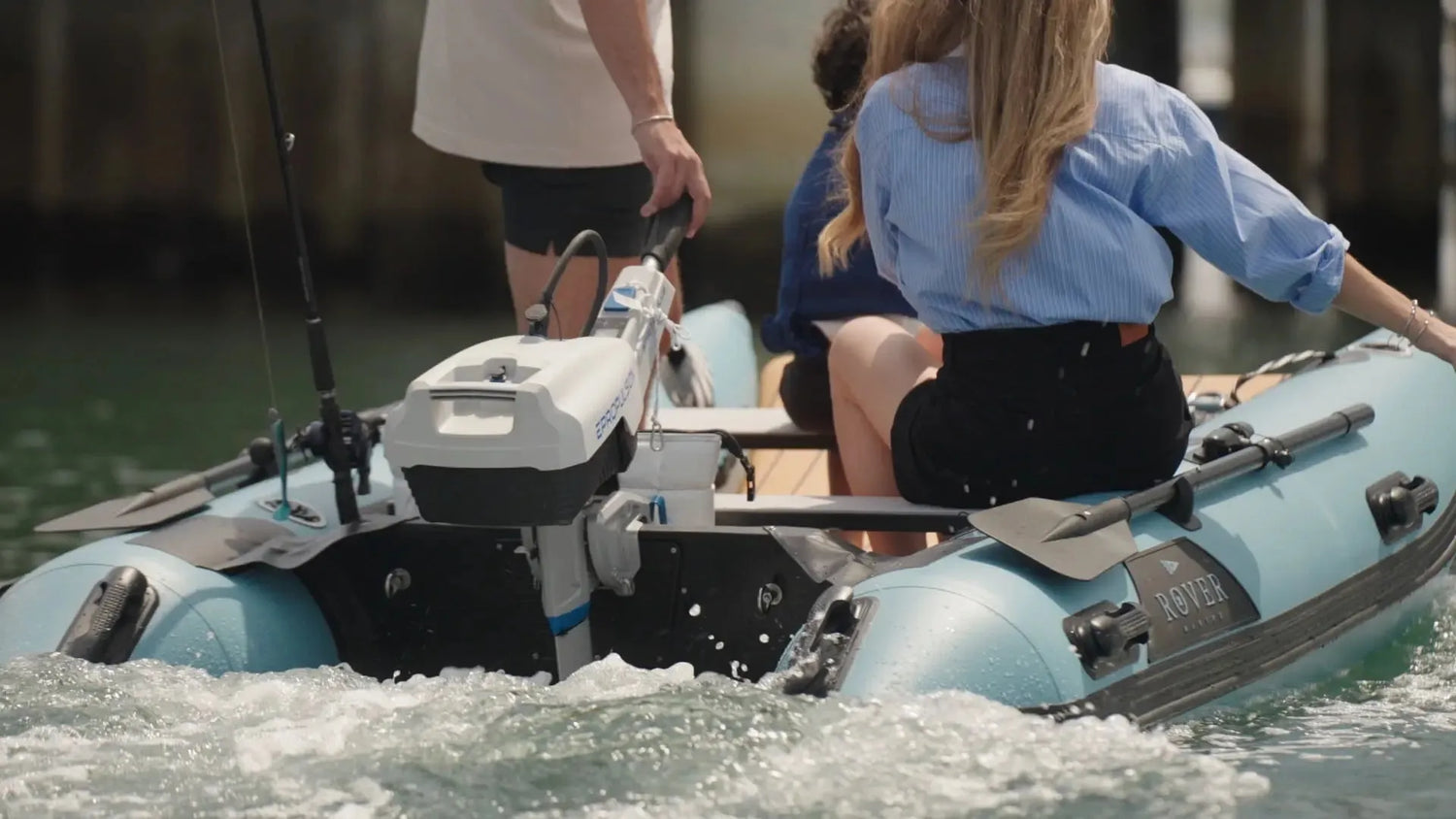
8-10 Feet: The Sweet Spot for Most People
This is where boats like the Battle Boat typically fall.
Best for:
- 2-3 people comfortably
- Yacht tender duty
- Fishing platform for 1-2 anglers
- Beach exploration
- Diving and snorkeling support
Reality check:
- Good balance of capacity and manageability
- Handles 5-10 HP motors well
- Stable enough for most conditions
- Still relatively easy to store
- Can carry decent amount of gear
Typical specs:
- Weight capacity: 600-900 lbs
- Actual comfortable load: 2-3 adults plus gear
- Motor range: 5-10 HP
- Deflated size: Fits in large duffel bag
10-12 Feet: Family Size
The Battle Cat catamaran design offers extra stability in this range.
Best for:
- 3-4 people comfortably
- Families with kids
- Serious fishing (room to move and cast)
- Diving operations with gear
- Longer trips with more supplies
Reality check:
- Noticeably more stable than smaller boats
- Can handle 10-15 HP motors
- Better in moderate chop
- Heavier and bulkier to deal with
- Takes longer to inflate
- Needs more storage space
Typical specs:
- Weight capacity: 900-1200 lbs
- Actual comfortable load: 3-4 adults plus gear
- Motor range: 10-15 HP
- Deflated size: Large bag, needs good storage
12-14 Feet: Serious Use
Best for:
- 4-6 people
- Commercial applications
- Rough water capability
- Extended trips
- Professional diving or rescue
Reality check:
- Excellent stability and capacity
- Can handle 15-20 HP motors
- Heavy (100+ lbs deflated)
- Requires serious storage space
- Not practical for casual use
- Expensive
14+ Feet: Commercial/Professional
Best for:
- Commercial operations
- Large groups (6+ people)
- Serious offshore capability
- Professional applications
Reality check:
- Overkill for most recreational users
- Very expensive
- Requires trailer for transport
- Needs powerful motor (20+ HP)
How to Actually Choose Your Size
Start With Your Primary Use
Yacht Tender:
- 8-10 feet is usually perfect
- Match to your yacht size (bigger yacht = bigger tender)
- Consider how many people you typically ferry
- Think about grocery runs and gear transport
Fishing:
- Solo: 8-9 feet works
- With a buddy: 10-11 feet minimum
- Need room to cast and move around
- Consider gear storage needs
Diving/Snorkeling:
- 10-12 feet for gear and multiple divers
- Need stable platform for gearing up
- Easy entry/exit is crucial
Beach Exploration:
- 8-10 feet is ideal
- Light enough to beach easily
- Enough capacity for picnic gear
Count Your Typical Passengers
Here's the real math:
- Manufacturer capacity: Maximum people in perfect conditions
- Actual comfortable capacity: About 60-70% of max
- With gear: Reduce by another person
Example: A boat rated for 4 people is comfortable with 2-3 adults plus gear in real-world use.
Consider Your Gear
Don't forget to account for:
- Coolers
- Fishing tackle and rods
- Diving equipment
- Safety gear
- Fuel tank (if not built-in)
- Anchor and line
All this stuff takes up space and adds weight. A boat that's perfect for 3 people might only fit 2 once you add all your gear.
Think About Storage
Where will you keep it?
- Apartment/condo: 8-10 feet max (fits in closet)
- Garage: 10-12 feet works
- Boat storage facility: Any size
- On your yacht: Match to available deck space
Remember: you need to store it somewhere when not in use. A boat you can't store properly won't last.
Motor Considerations
Boat size determines motor size:
- 8-9 feet: 5-8 HP
- 10-11 feet: 8-12 HP
- 12-13 feet: 12-18 HP
- 14+ feet: 18-25 HP
Bigger motor = more weight, more fuel, more expense. Don't overpower your boat.
Regional Considerations for US Waters
Coastal Waters (Atlantic, Pacific, Gulf)
- Go bigger for stability in chop
- 10-12 feet minimum for coastal use
- Consider wave height and wind
- Bigger tubes = more stable in swells
Great Lakes
- Can get rough—size up for safety
- 10-12 feet for open water
- 8-10 feet fine for protected bays
- Weather changes fast—have capacity for safety margin
Inland Lakes and Rivers
- Calmer conditions = smaller boats work fine
- 8-10 feet is perfect for most uses
- Focus on capacity over rough-water capability
Pools and Calm Bays
- 6-8 feet is plenty
- Stability less critical
- Portability more important
Common Sizing Mistakes
Going Too Small
The thinking: "We'll make it work, and it's cheaper."
The reality: Cramped, uncomfortable, unsafe in anything but perfect conditions.
Signs you went too small:
- Can't bring the gear you need
- Feels unstable with normal load
- Everyone's uncomfortable after 20 minutes
- Can't use it in moderate conditions
Going Too Big
The thinking: "Bigger is better, and we might need the space someday."
The reality: Pain to inflate, store, and use. Ends up sitting unused.
Signs you went too big:
- Takes forever to inflate
- Too heavy to move around easily
- Storage is a constant problem
- Overkill for 90% of your actual use
The Right Size for Different Scenarios
Weekend Lake House
- Best size: 10-11 feet
- Why: Handles family, guests, gear. Not too big to be a hassle.
Yacht Tender (30-40 foot yacht)
- Best size: 9-10 feet
- Why: Big enough for shore runs, small enough to store on deck
Fishing Platform
- Best size: 10-11 feet
- Why: Room to cast, move around, store gear
Beach Toy
- Best size: 8-9 feet
- Why: Easy to deal with, plenty for casual use
Dive Boat
- Best size: 11-12 feet
- Why: Need space for tanks, gear, multiple divers
Test Before You Buy (If Possible)
If you can, try before you buy:
- Rent different sizes
- Borrow a friend's boat
- Visit a dealer and sit in different sizes
- Bring your typical gear and see how it fits
An hour on the water will tell you more than any spec sheet.
The Bottom Line
For most people using an inflatable boat as a yacht tender, fishing platform, or general recreation on US waters, 9-11 feet is the sweet spot. It's big enough to be useful and comfortable, small enough to be manageable.
The Battle Boat in the 8-10 foot range works great for 2-3 people and typical tender duties. If you need more stability or capacity, the Battle Cat catamaran design offers extra room and stability in the 10-12 foot range.
Don't overthink it, but don't undersize either. Think about your typical use (not your once-a-year use), count your usual passengers plus gear, and add a little buffer. That's your size.
And remember: you can always rent a bigger boat for that one time you need it. But you're stuck with whatever size you buy for everyday use.

Leave a comment
All comments are moderated before being published.
This site is protected by hCaptcha and the hCaptcha Privacy Policy and Terms of Service apply.