

Most online advice about anchoring an inflatable dock assumes you are on a glassy pond with shallow water, no wind, no current, and nothing moving except the cooler lid.
That is not cruising.
Cruising is deeper water, afternoon wind, current that does not care about your plan, and a dock that needs to stay useful after the conditions change.
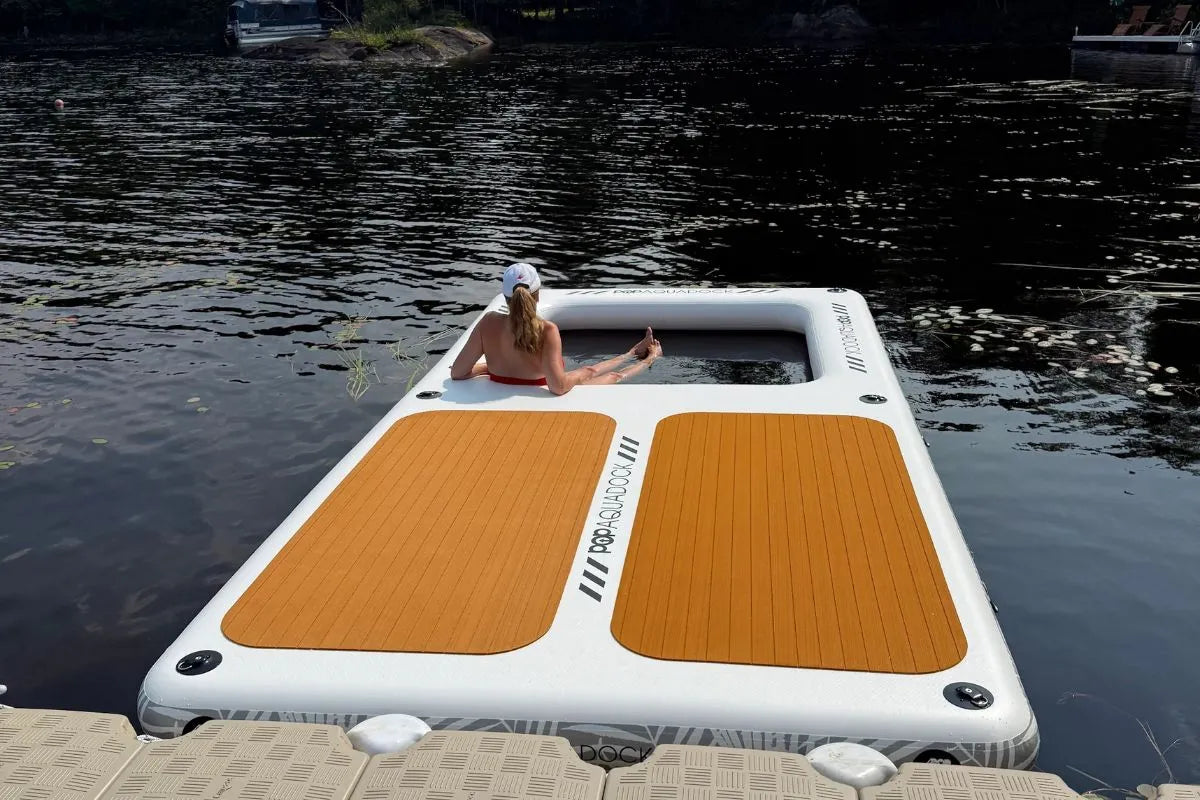
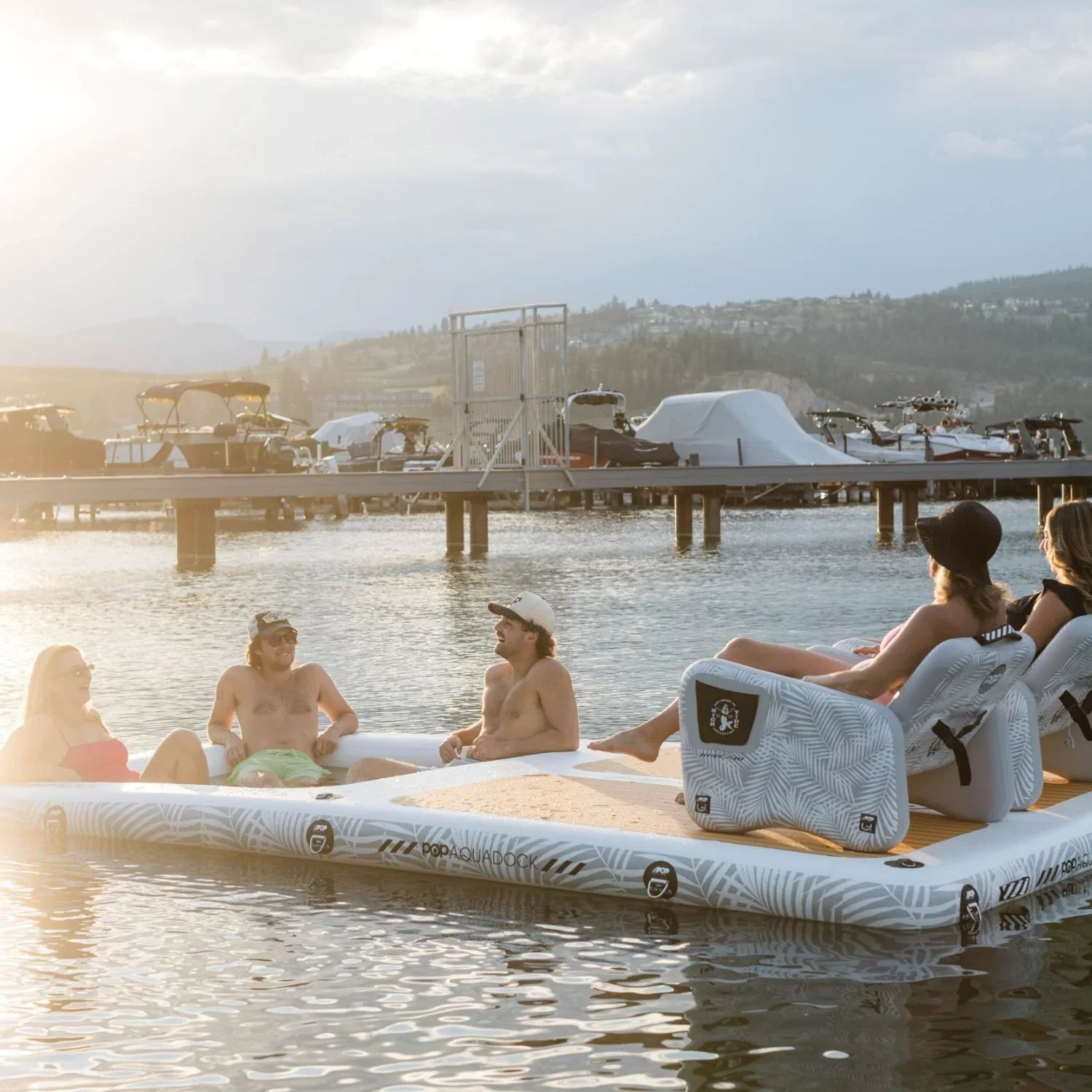
The POPUP DOCK 8 X 7 and 14' AQUADOCK are built to create more usable space on the water, but the dock is only as good as the setup holding it in place.
First Principle: Decide Whether the Dock Is Tethered or Anchored
There are two different setups, and most problems come from using the wrong one for the day.
Tethered to the Boat
The dock is tied to your stern, swim platform, beam, or slip setup. Your boat does the anchoring work, and the dock rides with the boat.
This is the easiest setup for calm coves, raft-ups, marina hangs, short lake days, and situations where the dock stays close to the boat.
It is fast to set, fast to break down, and usually the right choice when you are already confident in your boat anchor or dock lines.
Independently Anchored
The dock has its own ground tackle and holds station separately from the boat.
This setup makes sense when the dock needs to stay offset from the boat, when wind and current may not line up, when multiple boats are using one shared platform, or when you want the dock to remain in a specific location for longer periods.
If the dock is close to the boat and conditions are calm, tethering is usually clean and simple. If the dock needs to hold its own position in shifting wind or current, anchor it independently.
Scope: The Number That Matters Most
Scope is the ratio of anchor rode length to water depth. BoatUS explains anchoring as a system where the right anchor, rode, conditions, and technique all matter. The same principle applies to an inflatable dock, even though the loads are smaller than a full-size boat.
For a floating dock, under-scoping is one of the easiest ways to end up with a platform that drifts, swings awkwardly, or pulls toward the wrong place.
Use these working guidelines as a starting point, then adjust for the actual bottom, current, wind, and nearby hazards:
- Calm conditions and sheltered coves: 4:1 scope can work for short daytime use.
- Moderate wind or noticeable current: move closer to 5:1.
- Stronger wind, tidal current, or longer unattended use: 7:1 is the safer target.
- Deep water or open anchorages: consider whether tethering to the boat or anchoring on a shallower shelf is the better setup.
Carry more line than you think you need. Nylon rode is usually preferred over floating polypropylene because nylon stretches and absorbs shock loads. Floating line can also create prop-wrap problems if it is not managed carefully.
For a general anchoring refresher, review the BoatUS Foundation anchoring and mooring guide.
The Two-Anchor Bridle for Wind Shifts and Current
A single anchor lets the dock swing and weather-vane. That can be fine when the wind is steady and predictable.
The problem starts when current pulls one way and wind pushes another. The dock can sit sideways, load one corner, or swing into a position you did not plan for.
A two-anchor bridle helps the dock hold a more controlled position.
Basic Bridle Setup
- Identify the wind direction and current direction before setting anything.
- Set the first anchor upwind with proper scope.
- Set the second anchor offset from the first, often toward the current direction.
- Bring both rodes to a bridle ring, shackle, or clean connection point.
- Run one tensioned line from the bridle to the dock’s attachment point.
- Check the angle and reset if the dock is not sitting cleanly.
The goal is not to overcomplicate the day. The goal is to prevent one shifting force from controlling the entire platform.
Deep Water: Where Most Setups Get Messy
Deep water makes scope harder fast. If you are in 35 feet of water and trying to run full cruising-style scope, the amount of rode required becomes more than most people carry for a floating dock.
Instead of forcing a bad independent anchor setup, choose one of these approaches.
Option 1: Tether to the Boat
If your boat anchor is set properly and the dock is being used close to the stern or beam, tethering is often the better choice. The boat’s ground tackle does the heavy lifting, and the dock stays part of the boat’s swing radius.
Option 2: Anchor the Dock in Shallower Water
Many anchorages have a shallow shelf closer to shore. Set the dock there with more reasonable scope, then swim, paddle, or dinghy between the boat and the platform.
This often creates a better swim zone and keeps the dock out of the deeper-water anchoring problem entirely.
Option 3: Add Weight to the Rode
Some cruisers use a sentinel or kellet-style weight on the rode to improve the angle of pull and reduce shock. This can help in specific situations, but it adds complexity and should not be treated as a substitute for good judgment, safe spacing, and proper anchoring technique.
Wind Shifts: What to Do When Conditions Change
You set the dock at noon with the wind from one direction. By late afternoon, the breeze changes and the dock is suddenly riding toward the hull, swim ladder, shoreline, or another boat.
This is why the setup needs to account for the whole day, not just the conditions when you arrived.
Before the Shift
- Check the forecast before setting the dock.
- Look at what happens if the wind moves 90 degrees.
- Keep the dock clear of sharp edges, rub rails, props, ladders, and swim platforms.
- Place fenders before you need them.
- Leave yourself a clean way to move or re-tie the platform quickly.
During the Shift
- If the dock is tethered, move it to the new leeward side before it starts rubbing badly.
- If the dock is independently anchored, confirm it has enough clearance in its swing area.
- If you are using a bridle, check that both lines are still sharing load properly.
- If the setup no longer feels safe, break it down instead of forcing it.
Fender Placement: The Detail Nobody Mentions
An inflatable dock can handle normal water use, but you still want to protect it from hard edges, cleats, chafe points, and repeated rubbing against the hull.
If the dock may contact the boat, put fenders between the dock and the hull. Do not assume the dock’s side rail should take every rub by itself.
For longer setups, use two fenders on the boat side, check that no stainless hardware is grinding into the platform, and inspect tie points throughout the day.
Protect the dock-to-boat contact point, not just the boat. A clean fender setup prevents chafe, noise, and unnecessary wear.
The 14' AQUADOCK and 14' Yacht Dock: Different Anchoring Math
The 14' AQUADOCK and 14' Yacht Dock are larger platforms than the POPUP DOCK 8 X 7. More length gives you more usable space, but it also means the platform can catch more wind and create more leverage.
More Surface Area Means More Windage
When wind builds, a larger dock will usually need a more conservative setup. That can mean more scope, cleaner line angles, better fender placement, or using two points of control instead of one.
Two-Point Control Becomes More Useful
With a longer platform, you may want to control both ends so the dock stays aligned with the boat, shoreline, or swim zone. This is especially helpful when you want the long axis of the dock to stay parallel to your boat.
Do not overcomplicate calm lake days. But for deeper water, wind shifts, or bigger platforms, the anchoring plan should match the dock size.
Shop the Anchoring Setup
The flagship party platform. 8' x 7', 56 square feet of floating space, drop-stitch construction, beer pong template, 14 stainless steel D-rings, pump, carrying strap, and handles.
A larger 14' x 7' inflatable floating platform for lake days, waterfront staging, swimming, lounging, and bigger groups.
A premium 14' x 7' inflatable yacht platform for boat-side access, swim zones, tenders, and water sports staging.
Browse POP’s inflatable docks, floating platforms, dock bundles, chair bundles, AquaDock options, and Yacht Dock setups.
For more summer gear, browse the full POP Board Co. water sports lineup.
Frequently Asked Questions
How do I anchor an inflatable dock in deep water?
In deep water, the simplest choice is often to tether the dock to the boat and let the boat’s anchor do the work. If the dock needs to be separate, look for shallower water nearby where you can set more appropriate scope. Avoid short-scope setups in deep water if the dock needs to hold position for long.
What kind of anchor should I use for a floating dock?
Anchor choice depends on bottom type, wind, current, dock size, and how long the dock will be set. Sand and mud usually hold better than weed or rock. Small fluke, mushroom, or claw-style anchors may work for dock setups, but always size the system for the actual conditions.
Can I anchor an inflatable dock overnight?
You can, but only with the right setup and conditions. For overnight use, treat the dock more conservatively: use proper scope, check wind shifts, remove loose gear, and avoid relying on a short tether that can rub the dock against the hull all night.
How much wind can the POPUP Dock handle?
The limiting factor is usually the anchoring setup, line angles, bottom holding, and nearby hazards, not the platform alone. If the wind builds beyond your comfort level or the dock starts moving unpredictably, pull it in and reset or pack it up.
Do I need a separate anchor for the boat and the dock?
For calm daytime tethering, usually no. For independent positioning, overnight use, shifting wind, deeper water, or a dock set more than a short distance from the boat, a separate anchoring setup can be the better choice.
We Make These. We Use These.
An inflatable dock is easy to love when the water is flat. The real test is what happens when the wind changes, the boat swings, the kids keep climbing on and off, and the platform needs to stay where you put it.
The POPUP DOCK 8 X 7, 14' AQUADOCK, and 14' Yacht Dock are built to create more space on the water. The right anchoring plan is what turns that space into something you can actually trust.
Set it clean. Watch the wind. Respect the current. Give the dock room to work.
```

Leave a comment
All comments are moderated before being published.
This site is protected by hCaptcha and the hCaptcha Privacy Policy and Terms of Service apply.