


If you're deciding between an inflatable dock and a traditional fixed dock, you're probably wondering which one actually makes sense for your situation. The answer isn't one-size-fits-all—it depends on how you use the water, where you use it, and what you're willing to spend. This guide breaks down the real differences between inflatable and traditional docks so you can make a decision based on facts, not marketing hype.
The Core Difference: Permanent vs. Portable
The fundamental difference is simple: traditional docks are permanent installations that stay in one place year-round (or require professional removal). Inflatable docks are portable platforms you can set up, take down, and move wherever you need them. Everything else—cost, maintenance, durability, use cases—flows from this core distinction.
Here's when each type makes sense:
Choose inflatable if you:
- Rent your waterfront property or move frequently
- Use multiple water locations (different lakes, beaches, rivers)
- Need to remove the dock seasonally due to ice, storms, or regulations
- Want quick setup without permits or professional installation
- Have a budget under $1,000
Choose traditional if you:
- Own waterfront property and plan to stay long-term
- Need to support heavy boats or personal watercraft regularly
- Want a permanent structure that's always ready to use
- Live in an area with minimal ice or storm damage risk
- Have a budget of $3,000+ and can handle permitting/installation
For families who want flexibility and portability, inflatable docks deliver the best balance of performance and convenience.
Construction and Durability: What Actually Lasts
Traditional docks win on raw lifespan—a well-maintained aluminum or composite dock can last 20-30 years. But that doesn't mean inflatable docks are disposable.
How Inflatable Dock Construction Works
Quality inflatable docks use drop-stitch technology—the same construction as premium paddleboards. Thousands of internal threads connect the top and bottom layers, creating a rigid platform when inflated to 10-15 PSI. Military-grade PVC resists punctures, UV degradation, and saltwater exposure. An 8' x 7' dock with drop-stitch construction feels solid underfoot, not squishy like a pool float.
With proper maintenance (rinse after use, dry before storage, inspect regularly), a quality inflatable dock lasts 5-10 years. That's not as long as a traditional dock, but it's plenty of service life for most families—especially considering the cost difference.
Traditional Dock Materials and Longevity
Traditional docks use treated wood, aluminum, or composite materials. Aluminum and composite docks last longest (20-30+ years) but cost the most. Wood docks are cheaper upfront but require regular sealing, painting, and eventual board replacement. All traditional docks need professional installation and often require permits, adding time and cost to the project.
Installation and Setup: Time and Complexity

This is where inflatable docks dominate. Setup time for an 8' x 7' inflatable dock: 10-15 minutes with an electric pump. Setup time for a traditional dock: days to weeks, depending on permits, professional installation, and site preparation.
Inflatable Dock Setup Process
Here's the actual process:
- Unroll the deflated dock near the water
- Inflate to recommended PSI using an electric SUP pump (10-15 minutes)
- Secure using D-rings and anchors or tie-offs
- Do a quick safety check and you're done
No permits, no professional installation, no heavy equipment. Two people can handle the entire process.
Traditional Dock Installation Reality
Traditional dock installation involves:
- Permit applications (can take weeks or months depending on location)
- Site preparation and anchoring system installation
- Professional installation or advanced DIY skills
- Potential environmental impact assessments in regulated areas
- Seasonal removal and reinstallation in ice-prone regions
Even a simple floating dock requires anchoring, leveling, and securing—work that takes hours or days, not minutes.
Cost Comparison: Upfront and Long-Term
Cost is where the decision gets interesting. Inflatable docks are cheaper upfront, but how does the math work over time?
Real-World Cost Breakdown
| Dock Type | Initial Cost | Installation | Lifespan | Annual Maintenance | 10-Year Total Cost |
|---|---|---|---|---|---|
| Inflatable (8x7) | $600-$800 | $0 (DIY) | 5-10 years | $20-50 | $800-$1,300 |
| Traditional Wood | $3,000-$6,000 | $500-$2,000 | 15-20 years | $200-400 | $5,500-$10,000 |
| Traditional Aluminum | $5,000-$10,000 | $1,000-$3,000 | 20-30 years | $100-200 | $7,000-$15,000 |
Even if you replace an inflatable dock twice in 10 years, you're still spending less than a quarter of what a traditional dock costs. The ROI question isn't about which lasts longer—it's about whether you need a permanent installation or value flexibility and lower cost.
Hidden Costs to Consider
Traditional docks have hidden costs inflatable docks don't:
- Permit fees ($100-$500+ depending on location)
- Professional installation ($500-$3,000)
- Seasonal removal and storage (if required by ice conditions)
- Property tax increases (permanent structures can raise assessed value)
- Repair costs for storm or ice damage
Inflatable docks avoid all of these. You deflate, store, and you're done.
Maintenance Requirements: What You'll Actually Do

Maintenance is where inflatable docks shine. Traditional docks require ongoing work to prevent rot, corrosion, and structural failure.
Inflatable Dock Maintenance (Minimal)
Maintenance for inflatable docks is simple:
- Rinse with fresh water after each use (2 minutes)
- Dry completely before storage to prevent mold
- Inspect seams and valves regularly for wear
- Store in a cool, dry place away from sunlight
- Repair small punctures with included patch kit
Total annual maintenance time: 1-2 hours. Total annual cost: $20-50 for cleaning supplies and occasional patches.
Traditional Dock Maintenance (Ongoing)
Traditional docks require:
- Annual sealing or painting (wood docks)
- Inspection and replacement of corroded hardware
- Structural inspections for rot, cracks, or damage
- Cleaning to remove algae, barnacles, and debris
- Seasonal removal and reinstallation (ice-prone areas)
- Repair or replacement of damaged boards or sections
Total annual maintenance time: 10-20 hours. Total annual cost: $100-400 depending on materials and labor.
Environmental Impact and Regulations
Environmental considerations matter, especially in regulated waterways or ecologically sensitive areas.
Why Inflatable Docks Have Lower Environmental Impact
Inflatable docks minimize environmental disruption:
- No permanent anchoring that disturbs sediment or habitat
- Removable design allows seasonal habitat recovery
- Lightweight construction requires no heavy machinery
- No chemical leaching from treated wood or coatings
- Easier to comply with seasonal removal regulations
In areas with strict environmental regulations, inflatable docks often avoid permitting requirements that traditional docks trigger.
Traditional Dock Environmental Concerns
Traditional docks can impact local ecosystems:
- Permanent structures alter water flow and sediment patterns
- Treated wood can leach chemicals into the water
- Anchoring systems disturb lake or river bottoms
- Shading effects can impact aquatic vegetation
- Removal and reinstallation cause repeated disturbance
Many jurisdictions require environmental impact assessments for traditional dock installations, adding time and cost to the project.
Safety and Performance: Real-World Use
Safety and performance depend on how you use the dock, not just which type you choose.
When Inflatable Docks Perform Best
Inflatable docks excel for:
- Swim platforms and lounging areas
- Launching kayaks, paddleboards, and small watercraft
- Temporary event setups (parties, gatherings)
- Calm to moderate water conditions
- Family recreation with kids and pets
An 8' x 7' inflatable dock with drop-stitch construction provides a stable platform for multiple adults and kids. Non-slip surfaces, 14 stainless steel D-rings for anchoring, and 50-pound portability make them practical for real family use.
When Traditional Docks Are Necessary
Traditional docks are better for:
- Mooring larger boats or personal watercraft
- High-traffic commercial or rental operations
- Extreme weather or rough water conditions
- Year-round use without seasonal removal
- Heavy equipment loading and unloading
If you're regularly docking a 20-foot boat or operating a rental business, a traditional dock's weight capacity and stability justify the cost.
Accessories and Customization
Both dock types support accessories, but the approach differs.
Inflatable Dock Accessories
Common accessories for inflatable docks:
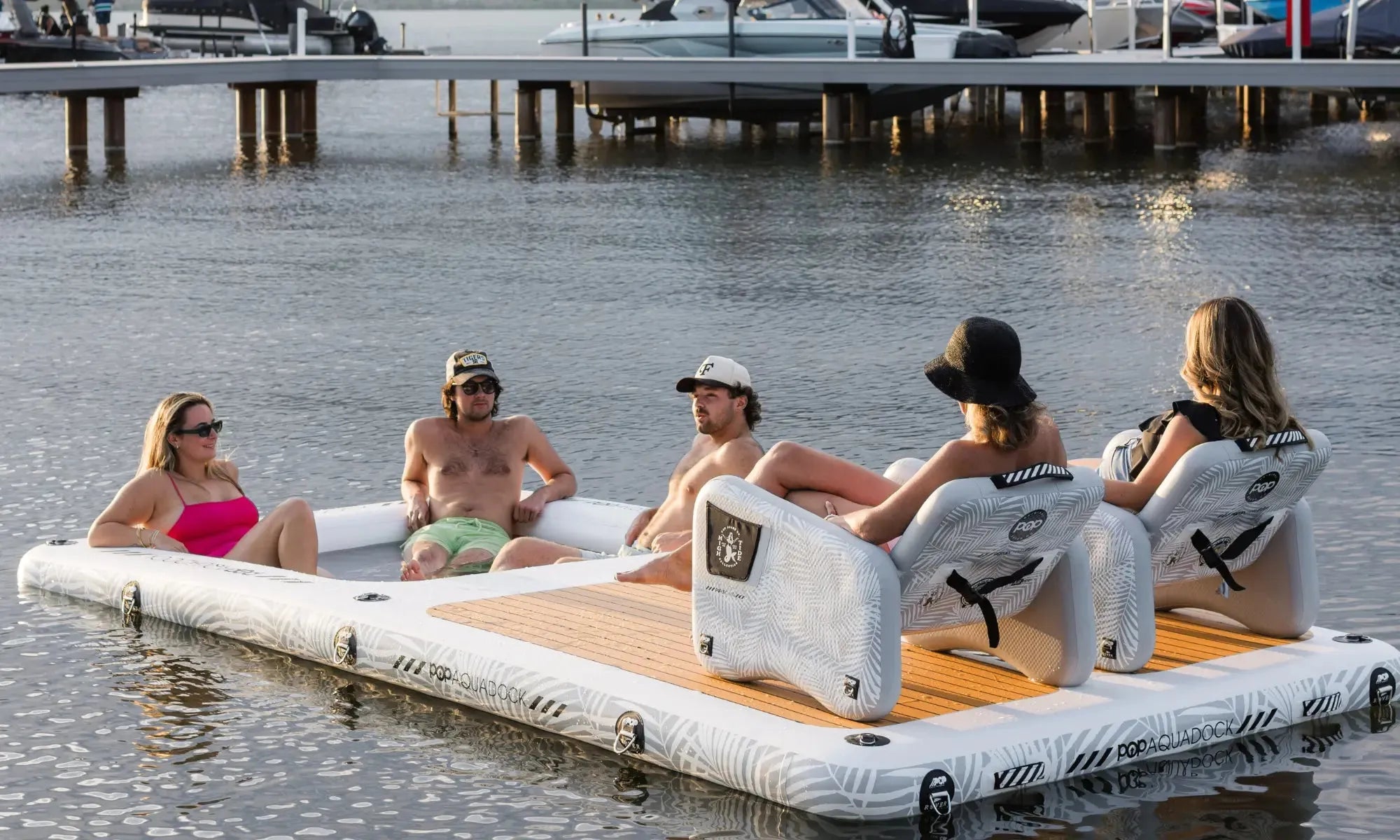
- Inflatable pop-up chairs for comfortable seating
- Electric pumps for faster inflation
- Anchor kits and tie-down systems
- Repair kits for on-site fixes
- Carrying straps for easier transport
Accessories are modular and portable, matching the dock's flexibility.
Traditional Dock Customization
Traditional docks support built-in features:
- Permanent ladders and stairs
- Integrated lighting and electrical systems
- Built-in seating and storage
- Boat lifts and PWC ports
- Railings and safety barriers
Customization requires structural modifications and adds to the overall cost.
The Bottom Line: Which Dock Is Right for You?
The decision comes down to your priorities:
Choose an inflatable dock if:
- You value portability and flexibility over permanence
- Your budget is under $1,000
- You use multiple water locations or move frequently
- You want minimal maintenance and no permitting hassles
- Your primary use is recreation, not heavy boat mooring
Choose a traditional dock if:
- You own waterfront property and plan to stay long-term
- You need to support heavy boats or equipment regularly
- You want a permanent, always-ready installation
- You have the budget for $5,000-$15,000+ upfront costs
- You're willing to handle permits, installation, and ongoing maintenance
For most families focused on recreation, swimming, and water sports, inflatable docks deliver better value and flexibility. For permanent waterfront property owners with heavy boats, traditional docks justify the investment.
To complete your water sports setup, explore inflatable paddle boards that pair perfectly with inflatable docks.
Frequently Asked Questions
What weight can inflatable docks support compared to traditional docks?
Quality inflatable docks support 1,000-2,000 pounds depending on size and construction. An 8' x 7' dock with drop-stitch construction handles multiple adults, kids, and gear comfortably. Traditional docks support significantly more weight—often 3,000-10,000+ pounds—making them better for heavy boats and equipment.
How do weather conditions affect inflatable docks?
Inflatable docks handle normal weather fine but should be deflated and stored during severe storms, high winds, or extreme cold. Traditional docks are more resilient in harsh conditions but can still suffer damage from ice, storms, or debris. In ice-prone areas, both types often require seasonal removal.
Can inflatable docks be used in saltwater?
Yes, if made from marine-grade PVC with stainless steel hardware. Always rinse thoroughly with fresh water after saltwater use to prevent salt buildup and material degradation. Traditional docks also work in saltwater but require more frequent maintenance to address corrosion.
What's the best way to store an inflatable dock off-season?
Deflate completely, rinse with fresh water, dry 100% to prevent mold, and store in a cool, dry location away from sunlight and temperature extremes. Use a protective bag to keep dust and pests out. Proper storage extends dock life to 5-10 years.
Do I need permits for an inflatable dock?
Usually not, since inflatable docks are temporary and removable. Traditional docks almost always require permits, environmental assessments, and compliance with local regulations. Check your local waterway authority to confirm, but inflatable docks typically avoid permitting requirements.
How do I choose the right size inflatable dock?
For a family of four, an 8' x 7' dock (56 sq ft) provides comfortable space for lounging and activities. For solo use or as a swim platform, an 8' x 3' plank offers portability with stability. Consider your typical use, number of users, and available water space when sizing.
What are common problems with inflatable docks?
Common issues include punctures from sharp objects, slow leaks from valve wear, and reduced stability in rough water. Regular inspection, proper inflation, secure anchoring, and prompt repairs prevent most problems. Quality docks with reinforced seams and stainless steel valves minimize these issues.

Leave a comment
All comments are moderated before being published.
This site is protected by hCaptcha and the hCaptcha Privacy Policy and Terms of Service apply.