



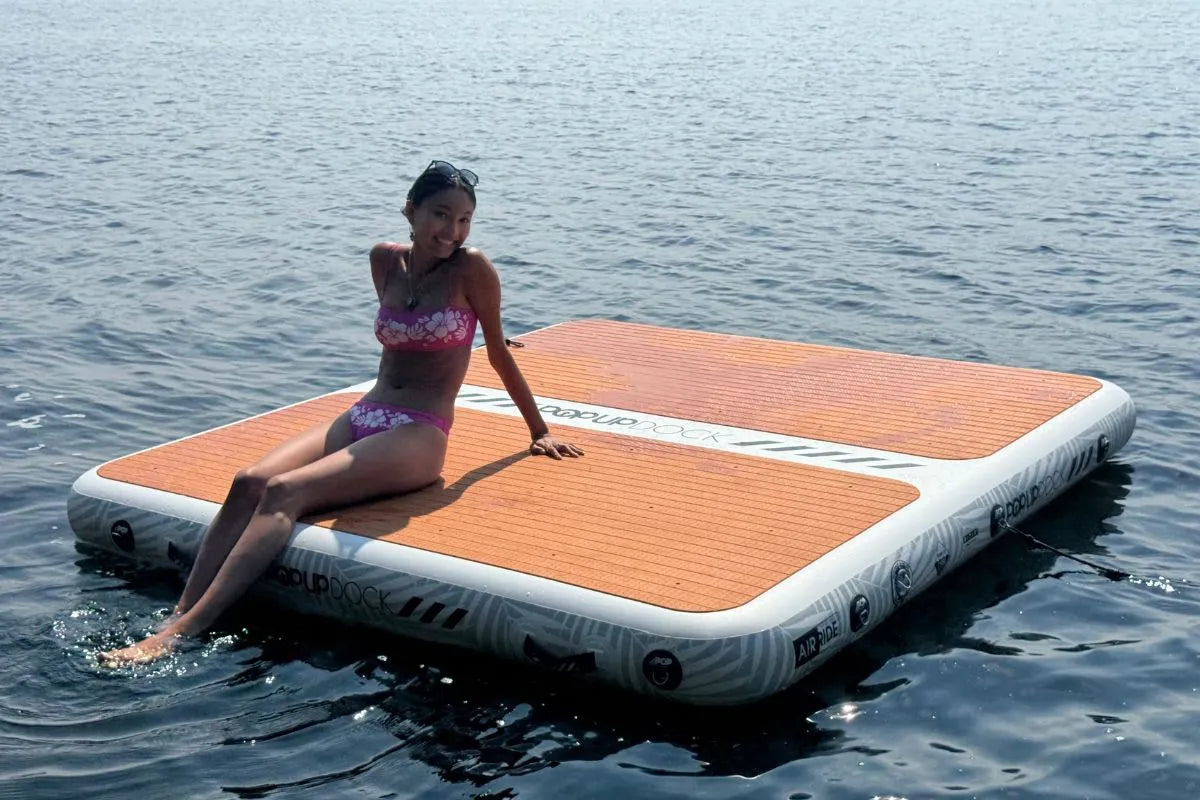
Buy the activity your crew will actually repeat.
A water trampoline is for bouncing. A firm platform is for gathering, resting, chairs, gear, and easier transitions. Both can be fun, but they create very different lake days.
The quick read
Trampoline
Choose it when jumping is the main event and the crew will manage the setup.
Bouncer
A smaller jump-focused option, still requiring product-specific clearance and anchoring.
Platform
Choose it when flexible everyday use matters more than bounce.
Start with the main activity
A true water trampoline uses a frame and spring or bungee system to create bounce. A water bouncer may look similar but delivers a different jumping feel. A floating platform is not designed to bounce. Its value is the stable surface around swimming, lounging, and boat use.
Do not buy by image alone. Read the product category, intended use, assembly steps, clearance requirements, anchoring instructions, user guidance, and storage dimensions.
Setup decides whether it gets used
Frames, jump surfaces, tubes, ladders, springs or cords, anchors, and protective components create a larger setup routine. Ask who will assemble it, how it reaches the water, where it stays, and what happens when weather changes.
A drop-stitch platform has a simpler parts list, but still requires pumping, positioning, attachment, drying, and packing. The easier routine usually wins on ordinary weekends.

Clearance and anchoring are part of the product
Jumping requires adequate water depth and clearance from shore, boats, docks, rocks, trees, lines, and other users. Use the manufacturer's exact siting and anchoring directions. Do not invent a generic depth or anchor rule for every product.
A platform also needs a conditions-based plan. Wind and current act on the exposed surface, and a loose line can create hazards. Inspect connections and keep the area clear of navigation routes.
Choose for the full household
A trampoline may be the clear winner for confident jumpers who will use it often. It may be the wrong choice when the household wants seating, gear staging, dogs, quiet lounging, or a platform that moves between boat and shore.
A firm inflatable platform is not a substitute for a trampoline. It is the alternative for buyers who value versatility over a single high-energy activity.
Use it like water gear
Inspect the product and conditions before every use. Follow the current manufacturer instructions for inflation, attachment, anchoring, intended activities, cleaning, repair, and storage. Keep users clear of propulsion, sharp hardware, boat traffic, unmanaged lines, and changing weather.
Where POP platforms fit
Choose between the compact POPUP Dock and the larger AquaDock by usable space, crew, transport, and storage. Use the current product pages for package details that can change.

POPUP Dock 8 X 7
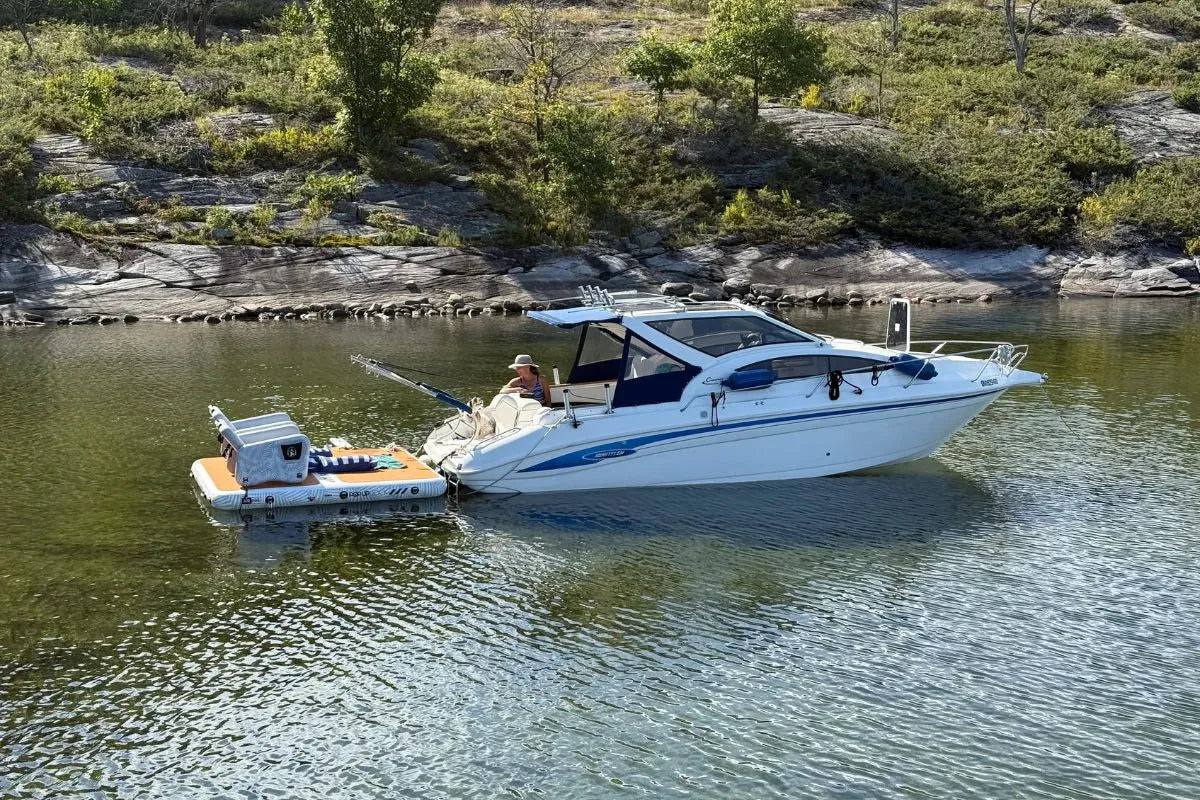
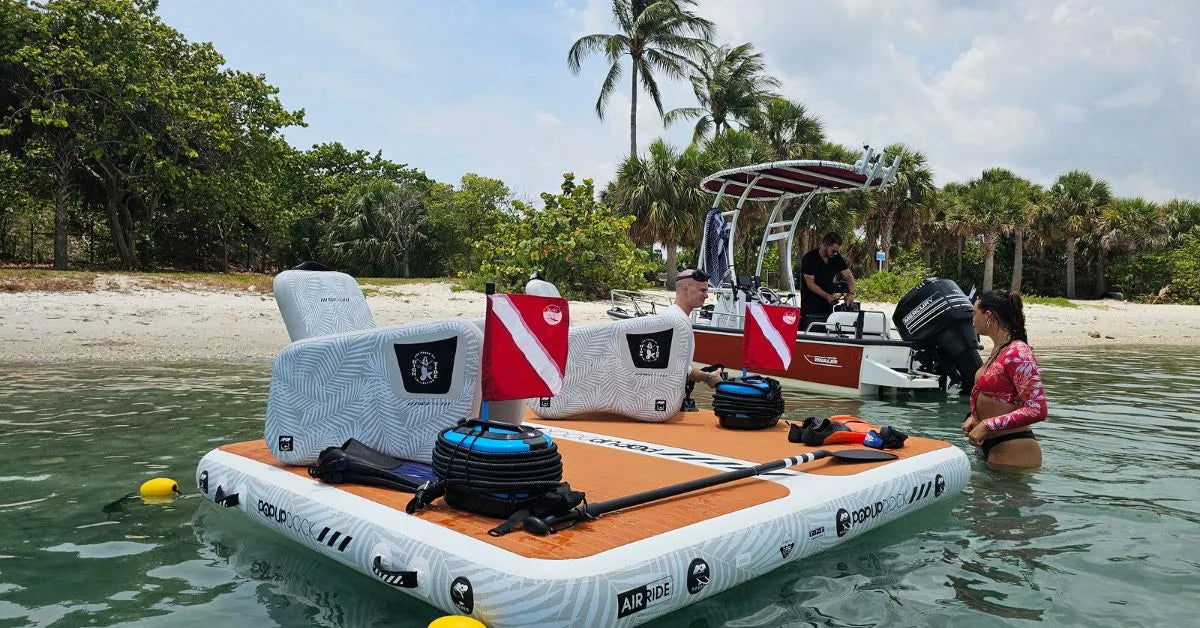
A compact drop-stitch platform for boat-side space, family swimming, dogs, chairs, and gear staging.

14' AquaDock
A larger platform for bigger crews, longer days, seating, coolers, swimmers, and more room to move.
Frequently asked questions
What is the difference between a water trampoline and a bouncer?
A water trampoline generally uses a frame and spring or bungee system for stronger bounce. Product designs vary, so confirm the manufacturer's description and instructions.
Can I jump from a POP inflatable dock?
Use POP platforms only for the activities allowed in their current instructions. They are firm recreational platforms, not water trampolines.
How deep should water be for a trampoline?
Use the exact manufacturer requirement and account for changing water level, the jumper, nearby hazards, and local rules. Do not rely on one universal number.
Which option is easier to store?
A drop-stitch platform generally packs into a compact roll. A trampoline may require storing larger frame and jump components. Check actual packed dimensions.
Choose the setup that gets used
Match the product to the people, water, transport, storage, and real routine. When the fit is unclear, ask POP before buying.

Leave a comment
All comments are moderated before being published.
This site is protected by hCaptcha and the hCaptcha Privacy Policy and Terms of Service apply.