

Length, width, volume. That is the real fit.
Buy a paddle board that is too small and it sits low, feels tippy, and wears you out. Buy one that is bigger than you need and it can feel like pushing a barge.
The sweet spot comes down to three numbers: length, width, and volume, matched to your weight, your height, your gear, and what you actually plan to do on the water.
Start with rider weight and volume
Volume is how much a board floats. It is usually measured in liters, and it matters because the board has to support your body weight, plus anything else you bring along.
Heavier riders, taller riders, new paddlers, and anyone carrying a cooler, dry bag, kid, dog, fishing gear, or extra passenger should pay closer attention to volume and capacity. A board that floats you well will sit higher on the water, feel more stable, and paddle with less drag.
If the board floats you with the rails level and your knees dry, you are in the right range. If water is lapping over the deck when you stand, or the board feels like it is sinking under you, you need more board.
Simple test: A correctly sized paddle board should float level under your normal load. If you plan to bring a dog, child, cooler, or fishing gear, size for the total load, not just your body weight.
Width is stability
Width is the single biggest lever on how stable a paddle board feels. A narrower board can be faster, but it also feels twitchier underfoot. A wider board gives you more platform, more forgiveness, and more confidence.
Most all-around paddle boards land around 30 to 34 inches wide. That can work well for casual paddlers, lighter riders, and people who already have some balance. But if stability is your priority, go wider.
The 11'6 El Capitan Bomber is the stability-first POP board. It is 36 inches wide with a 450 lb capacity, which makes it the better choice for larger riders, beginners, dogs, kids, fishing, tandem-style paddling, and anyone who wants the board to feel steady before they start chasing speed.
30 to 32 inches
Best for: Smaller riders, stronger paddlers, touring, and people who want better glide.
Tradeoff: Less forgiving for beginners, dogs, kids, and extra gear.
32 to 34 inches
Best for: All-around paddling, casual lake days, mixed users, and most average riders.
Tradeoff: Good middle ground, but not maximum stability.
35 to 36 inches
Best for: Beginners, heavier riders, kids, dogs, fishing, and confidence-first paddling.
Tradeoff: More stable, but not as fast as a narrower touring shape.
Length is for tracking, glide, and feel
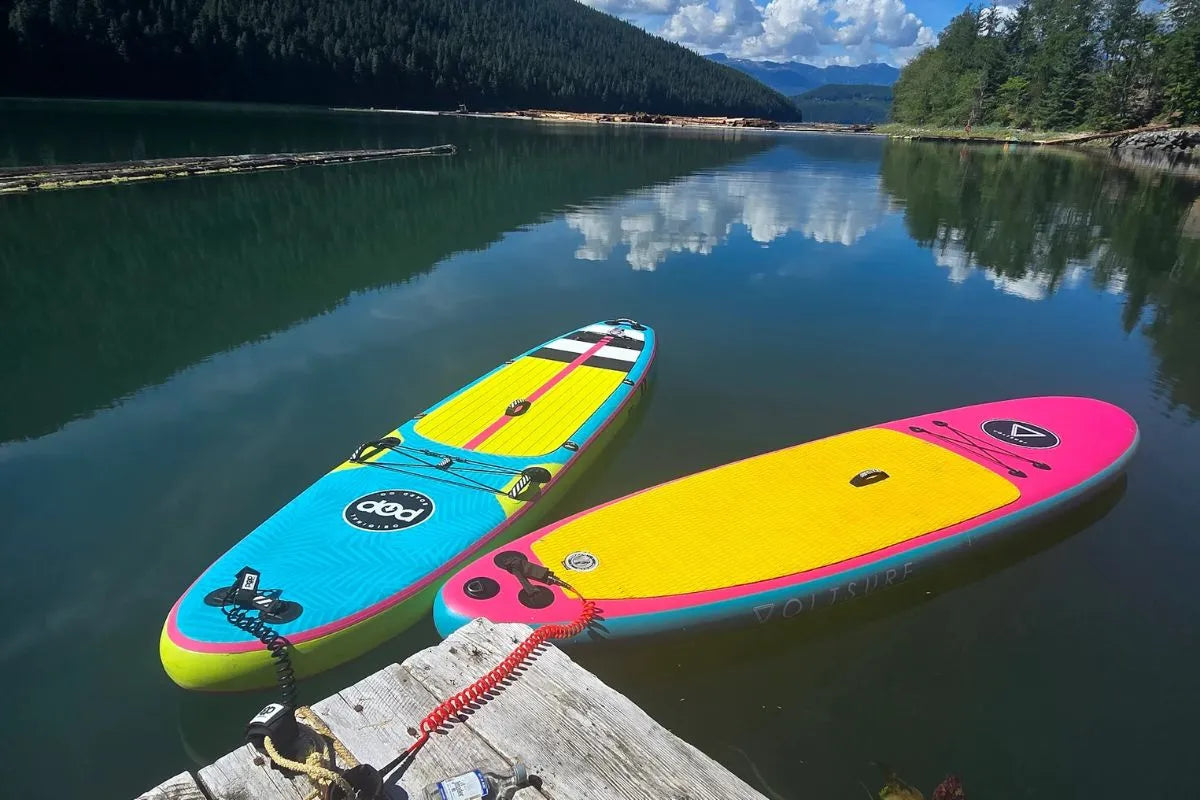
Length changes how a board moves through the water. Longer boards usually track straighter, glide farther per stroke, and feel better for covering distance. Shorter boards turn quicker, feel easier to manage, and can be better for relaxed paddling, smaller riders, tight storage, or more playful use.
The 11'0 Yacht Hopper is the touring-minded POP option, built with an 11' x 32" shape, cooler mounts, cargo D-rings, and extra room for longer flat-water adventures. The 10'6 Royal Hawaiian Palm is the easy-going all-around board for relaxed paddling, lake days, and everyday use.
Shorter boards
Turn easier, feel more playful, and can be simpler for smaller paddlers, casual use, and tight storage.
Longer boards
Track straighter, glide better, and make more sense for touring, distance, gear, and longer flat-water paddles.
Match the board to the use
The right paddle board size is not only about your height and weight. It is about what you want the board to do most often.
All-around and family
Choose a stable board with enough width for beginners, passengers, and casual lake days. This is where the Royal Hawaiian Palm makes sense.
Touring and distance
Choose a longer board with straighter tracking and room for gear. This is where the Yacht Hopper fits best.
Dogs, kids, or heavier loads
Choose maximum width and capacity. This is where the El Capitan Bomber is the confidence-first option.
POP rule: If you are unsure, size up on width and capacity. Extra stability is more enjoyable than a board that has you bracing the whole time.
Quick sizing rules that actually help
There is no perfect universal size because paddlers use boards differently. But these rules will keep most buyers out of trouble.
- If you are new: Go wider and more stable before you chase speed.
- If you are bringing a dog: Add the dog’s weight to your own and choose more width.
- If you are bringing a kid: Choose extra capacity and a deck with enough room to move.
- If you want fitness and touring: Choose a longer board that tracks well.
- If you want fishing: Choose a wider board with capacity for gear and room to stand.
- If you are between two sizes: Choose the more stable board unless you are specifically trying to go faster.
Best POP board sizes by paddler type
Here is the simple way to shop the POP lineup based on how you plan to use the board.
Royal Hawaiian Palm
Best for all-around paddling, casual lake days, lighter handling, and relaxed cruising.
Shop Royal HawaiianYacht Hopper
Best for touring, longer flat-water paddles, cargo, cooler mounts, and exploring farther.
Shop Yacht HopperEl Capitan Bomber
Best for maximum stability, dogs, kids, tandem-style use, fishing, larger riders, and gear.
Shop El CapitanThe short version
Start with total load, then choose width for stability and length for glide. If you are unsure, choose the board with more width and capacity.
A slightly bigger board still paddles fine for many riders, but a board that is too small can make every minute on the water feel harder than it should.
Paddle board sizing FAQs
What size paddle board do I need as a beginner?
Most beginners should prioritize width and capacity. A wider board is more forgiving, easier to balance on, and better for building confidence on calm water.
Is a wider paddle board better?
A wider paddle board is usually better for stability, dogs, kids, fishing, and beginners. A narrower board can be faster, but it usually feels less stable.
What happens if my paddle board is too small?
A board that is too small may sit low in the water, feel tippy, drag more, and make paddling harder. If water is washing over the deck under normal use, you likely need more volume or capacity.
What size paddle board is best for dogs?
Choose a wider board with enough capacity for both you and the dog. The El Capitan Bomber is the strongest POP option for dogs because it is 36 inches wide with a 450 lb capacity.
What size paddle board is best for touring?
Touring paddlers usually benefit from a longer board that tracks straighter and glides farther per stroke. The Yacht Hopper is the POP touring-style inflatable board.
Should I size up or down on a paddle board?
If you are unsure, size up on width and capacity. Extra stability is usually more enjoyable than a board that feels too small or too tippy.
Ready to pick your size? Match the board to the water day.
Compare POP inflatable paddle boards by shape, size, width, capacity, and use case so you can choose the board that actually fits you.

Leave a comment
All comments are moderated before being published.
This site is protected by hCaptcha and the hCaptcha Privacy Policy and Terms of Service apply.