


Kids do not need a perfect lesson. They need the right first water day.
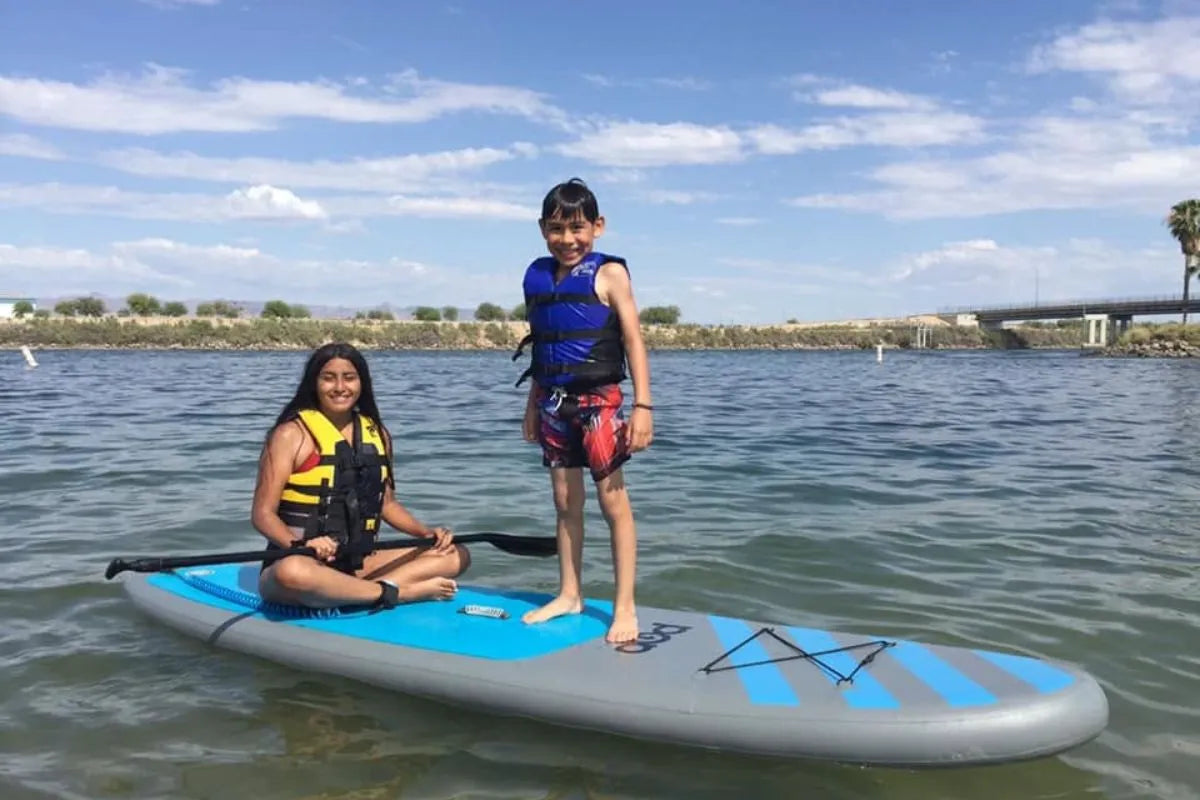
Paddle boarding is one of the easiest watersports to share with kids because it is calm, low-speed, and flexible. They can sit, kneel, ride along, splash, swim, or try paddling when they are ready.
The difference between a happy first paddle and a splash-and-cry session is simple: start with a stable board, calm water, the right safety gear, and a plan that feels like play.
Start with the right board
Stability is everything with kids. A narrow or low-capacity board might work for one adult paddler, but it can feel nervous once a child shifts, wiggles, reaches for the water, or climbs back on after a swim.
A wider, higher-capacity inflatable board gives the family more margin. It lets a parent stand and paddle while a child sits near the front. It also gives kids space to kneel, practice balance, and move without turning every little motion into a wobble.
The 11'6 El Capitan Bomber is the stability-first choice in the POP lineup because it is 36 inches wide and rated to 450 lb. That makes it a strong fit for parents paddling with kids, larger riders, dogs, fishing gear, and family-style use. The 10'6 Royal Hawaiian Palm is the easier all-around option for casual family paddles and lighter handling.
POP rule: When kids are coming along, do not buy the smallest board you can stand on. Buy the board that gives the whole family more room to relax.
Safety first, every time
Family paddle boarding should feel fun, but it still happens on real water. The basics do not change: life jackets, calm conditions, close supervision, a leash, and a launch plan.
Life jackets
Children should wear properly fitted, U.S. Coast Guard-approved life jackets around water. Check fit by weight, size, activity, and local rules.
Know the rules
Outside designated swim or surf areas, paddle boards are treated like vessels, so PFD rules apply. State and local rules may be stricter.
Use a leash
A leash keeps the board close if someone falls off. For calm flat water, a coiled leash is simple and keeps extra line off the deck.
Choose calm, shallow, warm water for the first outing. Stay close to shore, avoid boat wake, avoid wind, and end before kids are cold, tired, or frustrated.
What real POP families teach us
Reviews matter because they show what buyers actually do with the gear after checkout. POP reviews include multi-board families, parents using boards with kids, customers who bring dogs, and first-time paddlers who needed help choosing the right setup.
“Have two of the El Capitan paddle boards and they are the best... one board easily fits me and 1 or even two dogs.”
Sarah U., El Capitan“Started with 1, ended up with 3.”
Howard L., family paddle setup“Great service at a great price.”
Darrin R., POP customerThat is the family funnel: one good board gets everyone on the water, then the family starts figuring out how to build the whole setup. The right first board matters because it decides whether kids ask to go again.
Ease them in
The goal of the first session is not to create a tiny paddle coach. The goal is to help the child feel safe, curious, and excited to go again.
Sit first
Start with the child seated near the front while the adult paddles from the center.
Try kneeling
Let them kneel and feel the board while you keep things slow and steady.
Make it playful
Count fish, splash hands, practice balance games, stop to swim, and keep the mood light.
End early
Quit while they are still smiling. A short, happy session beats a long, cold one.
Parent tip: If they only sit and ride the first time, that still counts. Confidence comes before paddling skill.
Build their confidence
Kids progress at different speeds. Some want to stand on day one. Others are happy riding along for a few trips before they want their own paddle. Both are normal.
Keep the board pointed into calm water, use simple instructions, and avoid correcting every little thing. Teach them to look where they want to go, keep soft knees, stay low when unsure, and use the paddle as a helper, not a sword.
For the basics of stance, balance, falling, and getting back on, POP’s paddle boarding for beginners guide is a good next read. The American Canoe Association’s Smart Start program is also built around paddling safety, enjoyment, and skill development.
What to teach first
Stay low, look ahead, hold the paddle gently, keep hands inside the board when falling, and climb back on from the center area.
What to skip early
Long distances, windy days, deep cold water, crowded boat lanes, standing before they are ready, and turning the day into a test.
Pick the right family water
Location matters as much as board choice. A stable board can still feel hard if the water is windy, cold, choppy, crowded, or moving faster than the child expects.
Best first spot
Warm, shallow, calm water with easy shore access, little wind, no strong current, and no heavy boat traffic.
Good timing
Morning is often calmer than afternoon. Short sessions work better than trying to stretch the day too long.
Clear exit plan
Know where you will launch, rest, turn around, and get off the water if the child gets tired or weather changes.
Family rule: The first paddle should feel easy enough that kids remember the fun, not the fear.
Best POP boards for paddling with kids
Choose the board based on who is riding, how much room you need, and whether the board will be shared by one adult, kids, dogs, or the whole family.
El Capitan Bomber
The stability-first family board. Best for parents with kids, dogs, larger riders, gear, fishing, tandem-style use, and anyone who wants more platform.
Shop El CapitanRoyal Hawaiian Palm
The easy all-around family board. Best for relaxed lake days, lighter handling, first boards, casual paddling, and sharing between family members.
Shop Royal HawaiianAll Inflatable Paddle Boards
Compare POP board shapes by stability, capacity, length, width, use case, design, and the kind of family water day you want to build.
Shop Paddle BoardsDogs count as family too
Plenty of families bring both kids and dogs into the same water day. That is where board width, deck traction, and capacity become even more important.
A dog shifts weight differently than a child. They stand, turn, shake, sit, and decide the front of the board belongs to them. A wider board gives everyone more room to settle in without making every movement feel dramatic.
Pick more width
More width gives dogs and kids more margin to move without throwing off the whole board.
Use deck traction
Dogs need grip. Kids do too. A comfortable deck pad helps everyone feel less slippery when wet.
Next read: If the family passenger has four legs, read POP’s best paddle board for dogs guide before choosing a board.
The simple family plan
Choose a wide, stable board. Pick calm, shallow, warm water. Put kids in properly fitted life jackets. Use a leash. Start with sitting or kneeling. Keep the session short. Make it playful. End before anyone gets tired, cold, or scared.
That is how a first paddle becomes a family thing instead of a one-time experiment.
Paddle boarding with kids FAQs
Can kids paddle board?
Yes, kids can paddle board when conditions are calm, the board is stable, they wear the right safety gear, and an adult supervises closely. Many kids start by sitting or kneeling while an adult paddles.
What kind of paddle board is best for kids?
A wide, stable inflatable board is usually best for family paddling. If a parent and child ride together, choose a board with enough width and capacity for the full load.
Do kids need life jackets on a paddle board?
Yes, kids should wear properly fitted life jackets around water and follow federal, state, and local PFD rules. Outside designated swim or surf areas, paddle boards are treated like vessels.
Should kids stand up right away?
No. Start with sitting or kneeling. Let kids get used to the board’s movement before they try standing.
Which POP board is best for paddling with kids?
The El Capitan Bomber is the stability-first choice for parents with kids because it is 11'6", 36 inches wide, and rated to 450 lb. The Royal Hawaiian Palm is a friendly all-around option for relaxed family paddles.
How long should a first paddle board session be with kids?
Keep it short and positive. A 20 to 30 minute first outing can be better than a long session that ends with kids cold, tired, or frustrated.
Make the first paddle feel easy. They will ask to go again.
Start with the right board, calm water, proper safety gear, and a family-first setup that keeps the day fun.

Leave a comment
All comments are moderated before being published.
This site is protected by hCaptcha and the hCaptcha Privacy Policy and Terms of Service apply.